
A NAME IS NO LONGER JUST A NAME
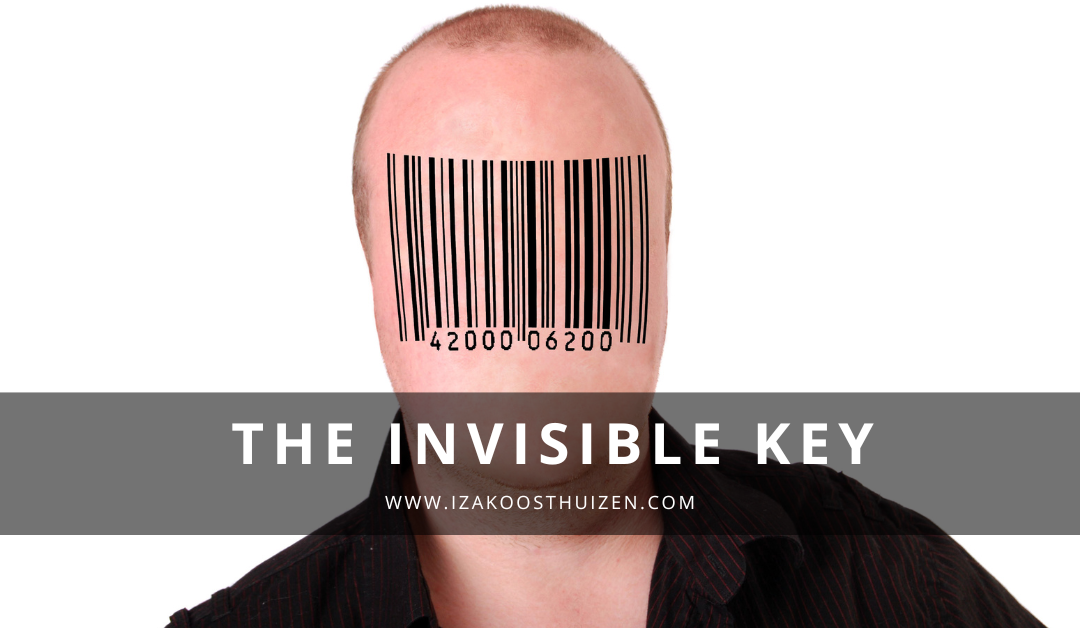
Once upon a time, proving who you were meant handing over a passport or signing your name. Now, identity has slipped into something far more complex and quietly powerful. Digital identity is not just a login. It is a living collection of verified signals that define you online. Your name, your date of birth, your biometrics, your financial footprint, even the way you interact with systems all contribute to this invisible version of you. The UK Government describes digital identity as the ability to prove who you are or confirm information about yourself digitally without physical documents. That could mean accessing services, opening accounts, or signing agreements from anywhere.
“Identity will be the most valuable commodity for citizens in the future, and it will exist primarily online.”
This is no longer a theory. Identity is becoming the currency that unlocks modern life.
SPEED, SIMPLICITY, AND A SILENT TRADE-OFF
The rise of digital identity has not happened by accident. It has been pulled forward by a demand for faster services, tighter security, and smoother user experiences. It promises:
- Faster access to services
- Less admin friction
- Stronger fraud detection
- More seamless digital journeys
But beneath that convenience sits a growing tension. The more valuable identity becomes, the more irresistible it is to those looking to exploit it. Thomas Husson captures this shift perfectly:
“Your mobile device quickly has become the easiest portal into your digital self.”
That small device in your hand is now a vault door. And every vault needs guarding.
LESSONS FROM A WORLD ALREADY LIVING IT
Some countries have already stepped into this future and are living with the results.
Estonia has built a digital society where citizens can vote, access healthcare, sign contracts, and run businesses entirely online. It is often seen as the gold standard.
India introduced Aadhaar, one of the largest biometric identity systems ever created. It has opened access to services for millions, while also sparking debates around privacy and data protection. Across Sweden and Denmark, bank-backed identity systems have become part of everyday life, trusted by both governments and businesses. These examples prove one thing clearly. Digital identity works. But only when trust keeps pace with technology.
POWER OR EXPOSURE: TWO SIDES OF THE SAME COIN
Digital identity is a paradox. It simplifies life while quietly concentrating risk. It can reduce fraud, streamline services, and open doors. Yet at the same time, it creates highly valuable pools of sensitive data that demand constant protection. As Peter Gabriel puts it:
“As we become so visible in the digital world, exactly who has our data and what they do with it becomes increasingly important.”
This is where the real debate lives. Not in the technology itself, but in who controls it and how it is used.
THE UK’S QUIET EXPERIMENT
The UK has chosen a more measured path. Instead of building a single national identity system, it is shaping a framework where certified providers deliver digital identity services. The aim is to give individuals flexibility while maintaining strong safeguards.
This approach focuses on:
- Trusted identity providers
- Interoperability across services
- Strong data protection aligned with GDPR
- User control and consent
It is a balancing act between innovation and caution, trying to avoid the risks of centralised control while still moving forward.
DOUBT IN THE SYSTEM
Even with these safeguards, hesitation lingers. Concerns continue to surface around surveillance, data breaches, loss of anonymity, and the risk of excluding those without digital access. There is also the fear of gradual expansion, where systems built for convenience evolve into something more controlling. The UK has seen debates like this before. Trust is not automatic. It has to be built, tested, and proven over time.
THE REAL BATTLE IS SECURITY
At its core, digital identity is not just a convenience story. It is a security story.
Modern systems rely on biometrics, multi-factor authentication, cryptography, and behavioural insights. Yet attackers rarely need to break the technology when they can manipulate the human behind it. Phishing, credential theft, and social engineering remain stubbornly effective. As Paul Martini explains:
“Ensuring that every user’s identity is properly managed, protected and secured is one of the most crucial tasks of any modern organization.”
Technology alone is not enough. Governance, awareness, and constant vigilance are what turn protection into reality.
WHERE IZAK OOSTHUIZEN STEPS IN
This is exactly where experts like Izak Oosthuizen make a difference.
Through a blend of strategic insight and practical cybersecurity leadership, Izak helps organisations navigate the complexity of digital identity without losing sight of what matters most: trust. His approach focuses on:
- Strengthening identity and access management strategies
- Reducing human risk through awareness and behavioural change
- Aligning security with business goals rather than slowing them down
- Building resilience against evolving identity-based threats
In a landscape where identity is both the key and the target, having the right guidance turns uncertainty into control.
THE TRUST TEST THAT DEFINES THE FUTURE
The future of digital identity in the UK will not be decided by technology alone. It will be decided by confidence. Systems must prove that they are secure, transparent, privacy-conscious, and accessible to all. If they succeed, they will reshape how services are delivered. If they fail, they risk becoming a fault line of distrust.
WHEN IDENTITY BECOMES THE PERIMETER
The boundaries of cybersecurity have shifted. Identity is now the frontline. Every login, every transaction, every digital interaction depends on proving who you are. That makes identity both the ultimate enabler and the most attractive target. The UK now stands at a defining moment. It can learn from global pioneers, address public concerns, and build something that works not just technically, but socially. Because in the end, this is not just about systems or infrastructure. It is about confidence. And in a world where your identity unlocks everything, confidence is the one thing you cannot afford to lose.